The Third Act Happens at the Table: Why the Lobby Outperforms Your Best Post
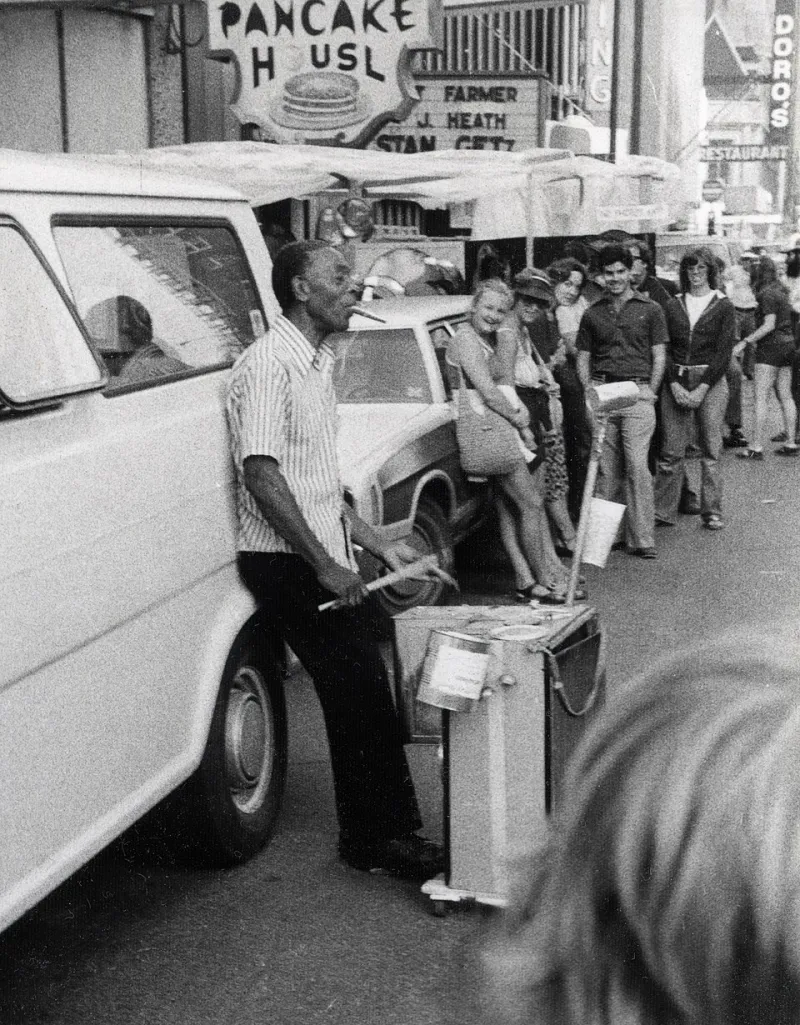
Photo: Acabashi, CC BY-SA 4.0, via Wikimedia Commons
The show I remember most from last year wasn't the tightest one. It was a Thursday in Nashville, maybe sixty people, a room with a bar along one wall and a stage barely wide enough for a stool. Fine show. Good show, even.
What I remember is what happened after. The performer came out, sat on a folding chair behind a card table with a stack of records and a hat full of stickers, and talked to every single person who wanted to talk. Not pitching. Asking. He remembered the name of a woman who'd seen him in Chattanooga four years earlier, and asked about the job she'd mentioned, and she stood there for ten minutes and then bought two shirts and drove home delighted.
I've thought about that night a lot, because it solved a problem I'd had for years: how do you build an audience in a world where nobody trusts a post?
The Show Ends. The Performance Doesn't.
Here's the argument, and I'll make it plainly: the four to ten minutes after the last number are not the denouement. They are the third act.
Act one is the material. Act two is the room — reading it, working it, riding it. Act three is the handful of people who have chosen to stand near you in a lobby at 10:40 p.m., and what you do with that.
Most performers treat that act as a receipt: money exchanges hands, thanks are muttered, and they retreat. That's a waste of the most undivided attention you will ever get from a stranger. No algorithm. No scroll. Just a person who liked you enough to stay standing.
Nobody Remembers the Post. They Remember the Handshake.
I'm not anti-social-media. My site exists, my clips exist, and I've booked work off of them. But a post competes with everything else in the world, and a handshake competes with nothing.
A person who has heard you play, then heard you say their name, then heard you be genuinely curious about their evening, is not a follower. That's a different category of person entirely. They're the ones who bring a friend next time, who email you three years later, who tell the story of the night they saw you in a tiny room before anybody knew.
You cannot engineer that with content. You can only be present for it.
Treat the Table Like a Stage, Because It Is One
When I come out front, I'm still performing. Not in a fake way — nobody wants the character voice at the merch table — but in the sense that I'm conscious of the energy I'm carrying, the way I'm standing, whether I look like someone who's glad to be there.
Practical stuff matters more than people think. Stand if you can; a body behind a table is a barrier. Keep the table uncluttered enough that someone can set down a drink. Don't break down your gear while people are trying to talk to you. And give the person in front of you your eyes, not the line behind them.
If your show has a persona, drop it gently and visibly. Let them see the difference between the act and the person. That gap is where loyalty lives.
Sell Less. Ask More.
Here's the discipline that changed things for me: no pitch until someone asks.
Instead, I ask questions. What brought you out tonight? Was it your first time here? What do you do in town? Not as a script — as an actual interest in the person in front of me. Half of them will ask what I'm working on. Half won't touch the merch. Both outcomes are fine.
When they do buy, sell them the one thing that fits what they told me, not the bundle. When they don't, still be warm, because a person who leaves feeling good about a five-minute conversation is worth more over ten years than the margin on a sticker.
And a small thing that matters: no tollbooth on the photo. Don't hide the pictures behind a purchase. Don't make a wristband required for a handshake. Generosity at the table is not a discount strategy. It's the whole point.
Three Things That Cost Nothing
Get the name right. Ask for it, use it, and if it's a room of forty people, ask a second time before you embarrass yourself. Learn the pronunciation of the ones who seem like they'll come back.
Be specific. Not "thanks for coming." Something like: "You laughing at the thing about the dog at exactly the wrong moment saved that whole bit." Specificity is proof you were actually in the room.
Make a real promise or none at all. "I'll be back at this venue in April, I think" is noise. "I'm back in this room March 12, and I'll put you on the list if you email me" is a relationship. Anything you'd be annoyed to be held to, don't say.
Boundaries Are Part of the Craft
I want to be honest about the other side. The lobby can get long, and the performer has done two hours of work already. A few things I've learned to hold: keep your greeting for the next person moving, give a clear and cheerful close — "I've got to get packed up, but thank you for staying" — and don't promise anyone a private conversation you can't actually have.
If someone is being inappropriate or too drunk to be safe, you don't owe them the grace of the after-show. The table is an extension of the show, which means the same rules apply: everyone in the space gets to be okay.
Build the Room, One Handshake at a Time
The math on this is slow and unglamorous. Ten conversations a night. Two people who remember you. A mailing list that grows by six addresses a month and is actually read, because they met you first.
But it compounds, and unlike almost everything else in this job, nobody else is competing for that moment. The show gets you on the stage.
The lobby gets you invited back.