Someone in Row Four Has an Opinion: A Working Guide to Crowd Interruptions
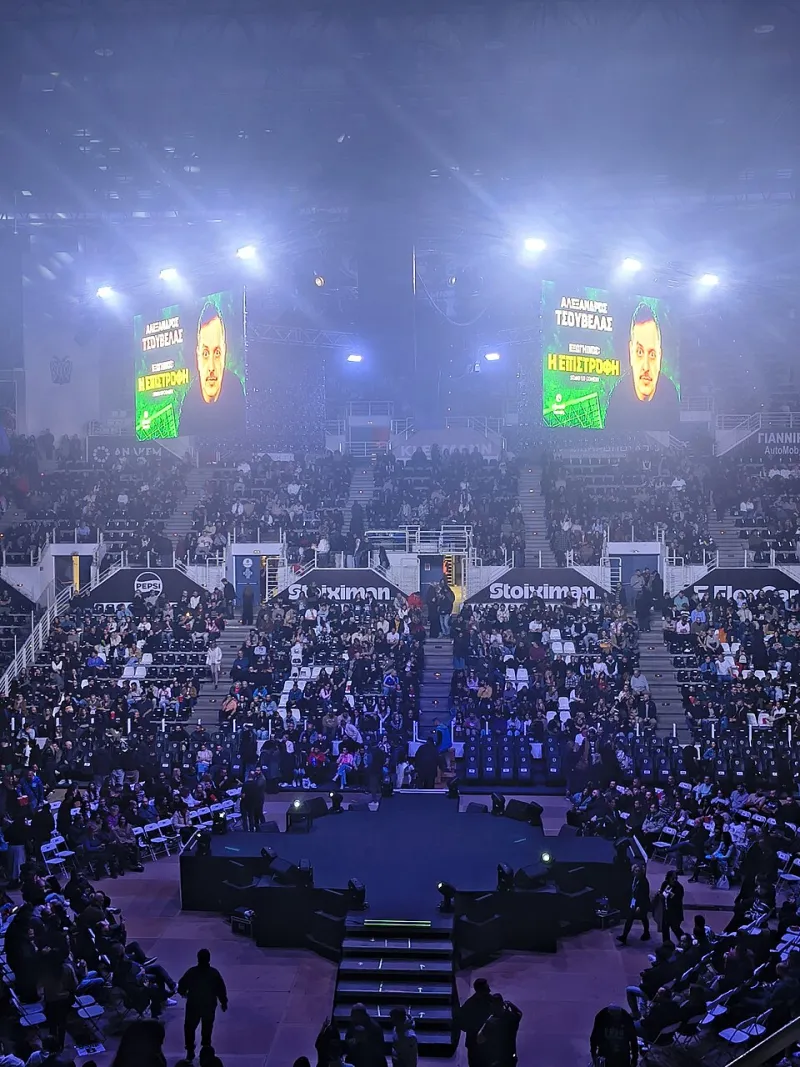
Photo: ΣΙΤ, CC BY-SA 4.0, via Wikimedia Commons
There is a specific sound a room makes when someone decides to talk back. It isn't laughter. It's a small collective inhale — two hundred people all checking, at once, whether the person on stage is about to fall apart.
I know that sound well. I've heard it in a converted warehouse in Austin, in a basement bar in Chicago where the ceiling was so low I could touch it, and in a casino lounge in the Midwest where a man in a camo hoodie informed me, at volume, that I was wasting his Tuesday.
He was not wrong about the Tuesday. But he did not get to keep the room, and that is the whole skill.
The First Two Seconds Belong to You
The instinct when you get interrupted is to answer immediately. Don't. The fastest way to hand a heckler the microphone they don't deserve is to snap back before you've decided what you're doing.
What I do instead is small and physical: one full breath, one slow sip of water, one deliberate step to a different part of the stage. It buys maybe four seconds. Four seconds is an eternity in a room where everyone is watching to see if you flinch. Silence on your terms reads as control. Silence on their terms reads as a stall.
That's the whole difference, and it lives in your body before it lives in your mouth.
First, Diagnose the Interruption
Not all interruptions are heckles, and treating them the same is how performers get into fights they didn't need to have. I sort them into three buckets, fast, before I say anything.
The fan. They love the show so much they can't stay in their seat. They're finishing your punchline or yelling a reference to a bit from two years ago. This person is not your enemy; they're an overexcited collaborator. They need to be included and then quietly redirected.
The drinker. No target, no thesis, just volume. Usually friendly, frequently confused, occasionally a hazard. There's nothing to win here. There's only a shape to give the noise.
The saboteur. Rare, but real. This one needs the room to see you lose. They are not heckling your material; they're heckling the idea that you get to stand up there at all.
Get this wrong and you'll do something terrible — you'll go to war with a fan in front of a crowd that came to like you.
Agree First, Steer Second
For the fan and the drinker, the improv move is almost always right. Agree with the interruption, raise it, and then hand it a job.
Someone shouts a suggestion mid-story? Take it. "That's a better ending than the one I wrote. Give me a second, I'm keeping it." Now they're a collaborator, not a competitor, and you've bought yourself a laugh.
Someone yells the thing you were about to say? "Great minds. You want to come up and finish? No? Smart. It gets weird from here."
A drunk guy in the back announces he's had four beers? "Four. That's a pace I can respect. You're going to be my barometer tonight — when you stop laughing, I'll know to change material."
He is now on your team. He will also, quietly, behave, because you gave him a role and roles come with expectations.
The Callback Is the Thing You Save
If there's one technique worth building into your act deliberately, it's this one.
When an interruption happens, note the exact wording. Then bring it back — not in thirty seconds, but twenty minutes later, in a completely different context. The room will erupt, because they were there when it happened. You've just turned a disruption into a private joke shared by everyone in the building. That's the closest thing live performance has to magic.
The catch: you have to be listening hard enough to remember the phrasing. Half of handling a heckler is simply paying attention, which is also, conveniently, most of what makes a great show.
When to Stop Playing Nice
Here is the part the comedy-school videos leave out. Sometimes the answer isn't a clever line. It's a door.
I shut it down — immediately, without jokes — when the interruption is a slur, when it's aimed at another audience member, when it's the third time from the same person, or when anything about the moment feels physically unsafe. The line I use is boring on purpose: "I'm going to keep going with the show, and I need you to let me." Flat voice. No smile. Eye contact.
If that doesn't work, I stop performing and let the room's own social pressure do the work. House lights, staff, a short break if necessary. Ending a crowd-work exchange is not a failure of wit. Keeping a room safe and functional is the job.
The performers I admire most aren't the ones with the sharpest comebacks. They're the ones who never seem rattled, because they've decided in advance where the line is.
The Room Remembers Your Recovery, Not Their Comment
After the save, do one more thing: don't punish the audience. It's tempting, once you've handled a heckler, to keep the room at arm's length for the rest of the night, doing material with a chip on your shoulder. That's how a great save turns into a mediocre second half.
Instead, thank them. Move back into the material within a minute. Bring the energy up rather than matching the interruption's ugliness. And on the way out, if it's safe and appropriate, check in with the person directly — sometimes the loudest guy in the room is having the worst week of his life and picked the wrong way to say so.
Every interruption is a free scene you didn't have to write. You just have to be calm enough to notice it's there.